The Avian
Paradise
A birder's haven with over 590 recorded species in vibrant tropical habitats.
Wings over Belize
Because of its small size and incredibly diverse geography, Belize represents one of the most concentrated, high-yield birding destinations on the planet. From the wetlands of Crooked Tree to the dense broadleaf canopy of the Chiquibul, the sheer density of avian life is staggering. More than 590 species of birds have been officially recorded here.
Whether you are a casual observer hoping to spot a toucan from your lodge balcony or a "hardcore lister" seeking endemic species like the Yucatan Jay in the deep northern forests, Belize offers world-class birding infrastructure and highly trained local guides.
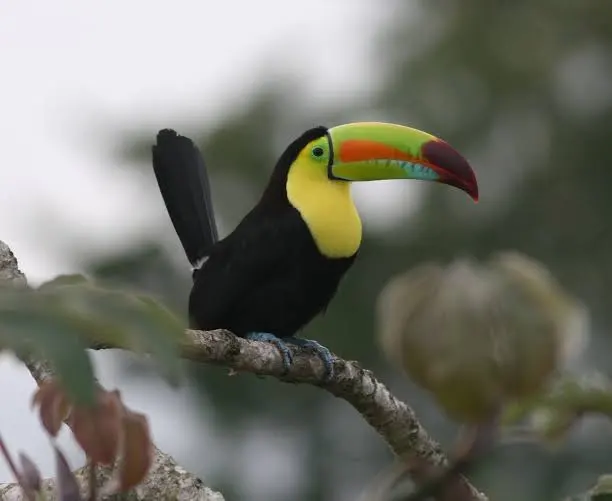
Ramphastos sulfuratus
The Keel-billed Toucan in its natural habitat.
The Keel-billed
Toucan
Recognized by its massive, vividly colored beak that accounts for nearly a third of its body length, the Keel-billed Toucan is the National Bird of Belize. Despite its cartoonish appearance, the beak is hollow and surprisingly light, functioning as a precise tool for plucking fruit and a thermoregulation device to expel body heat in the dense jungle.
They are profoundly social birds, often seen moving through the canopy in small flocks. Their croaking calls resemble the sound of a frog and echo loudly through the morning mist.
The Apex Predator
The Harpy Eagle, one of the largest and most powerful eagles in the world, represents the holy grail for birders in Belize. Capable of lifting prey equal to its own body weight (such as monkeys and sloths), the Harpy is a critical indicator of jungle health. Thanks to successful reintroduction programs spearheaded by the Belize Fund for a Sustainable Future, they are once again breeding wild in the remote Maya Mountains.
7 ft
Wingspan
Talons
Size of a Grizzly Bear's
Endangered
Conservation Status
Top Birding Hotspots
Crooked Tree Wildlife Sanctuary: Established in 1984 by the Belize Audubon Society, this vast network of lagoons, swamps, and waterways provides vital wintering habitat for thousands of migratory birds. The star of the sanctuary is the massive Jabiru Stork, the tallest flying bird in the Americas.
Cockscomb Basin Wildlife Sanctuary: While famous for jaguars, Cockscomb's dense tropical moist forest is paradisiacal for birders. Here you can easily spot the Scarlet Macaw, the Crested Guan, and the elusive Agami Heron hunting along the riverbanks.
Mountain Pine Ridge: The shift from broadleaf to pine savanna introduces an entirely different cast of characters. Look for the localized Rufous-capped Warbler, the Acorn Woodpecker, and soaring raptors riding the thermals over the granite ridges.
Timing Your Expedition
While resident birds like Toucans and Trogons can be seen year-round, the absolute peak time for birdwatching in Belize is during the North American winter, specifically between January and April. During this window, Belize's resident population swells dramatically with migrants escaping the freezing northern temperatures. The dry season (February–May) also concentrates waterfowl into dwindling lagoons, making spotting much easier.
Essential Gear for the Tropics
Jungle birding is notoriously difficult; birds are often high in the dense, shaded canopy. High-quality binoculars (8x42 or 10x42) with excellent light-gathering capabilities are essential. Bring lightweight, breathable clothing in muted, earthy colors. An umbrella is surprisingly useful—not just for sudden downpours, but for keeping a spotting scope dry without overheating underneath a rain jacket. Always carry strong insect repellent and consider treating your boots with Permethrin to repel ticks and chiggers.
The Economic Impact of Birding
Birdwatching is a cornerstone of Belize's sustainable ecotourism model. By hiring local birding guides and staying in eco-lodges, visitors create direct economic incentives for local communities to protect their forests rather than clearing them for agriculture. Organizations like the Belize Audubon Society manage over 190,000 acres of protected land, largely funded directly by the ecotourism sector. Every birder who steps foot in Belize contributes precisely to the preservation of the habitat they came to observe.
Grab Your
Binoculars.
Join an expert-guided birding expedition today.