The Sky
Palace
Standing at the height of ancient power in the Chiquibul Forest, Belize's most massive archaeological site.
The Superpower of the Chiquibul
Caracol (Oxhuitzá in ancient Mayan) was not just a city—it was an empire. At its peak in 650 AD, it covered an area of nearly 70 square miles, supporting a population of over 150,000 people. This was double the population of modern-day Belize City. The site famously defeated the mighty Tikal in Guatemala, a military victory that ushered in a golden age of construction and expansion for Caracol.
In this 2,000-word comprehensive deep-dive, we explore the site's military triumphs, its revolutionary agricultural practices, and the architectural masterpiece that remains the tallest man-made structure in Belize to this day.
Caana: The Sky Palace
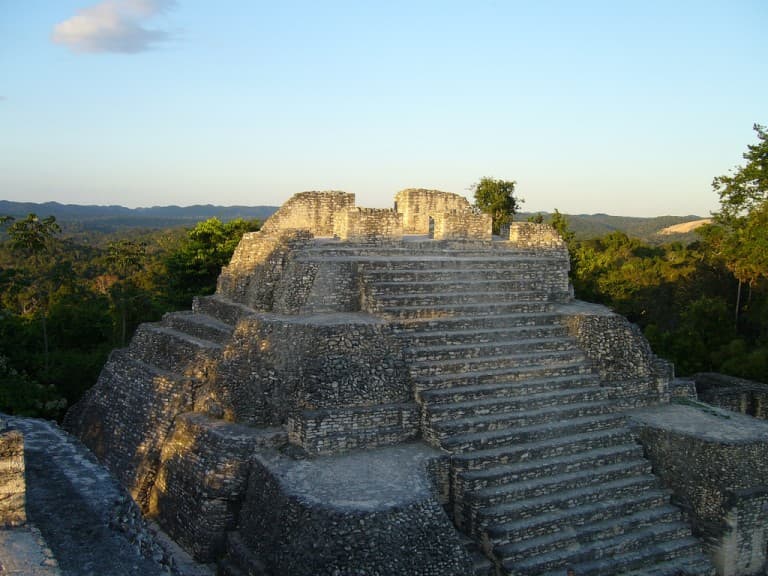
Standing 141 feet (43 meters) tall, Caana is the focal point of Caracol. Even in the 21st century, it remains the tallest man-made structure in Belize. This massive pyramidal complex housed the royal family and served as a ceremonial center that could be seen from miles away across the jungle canopy.
141 ft
Structural Height
71+ Rooms
Internal Chambers
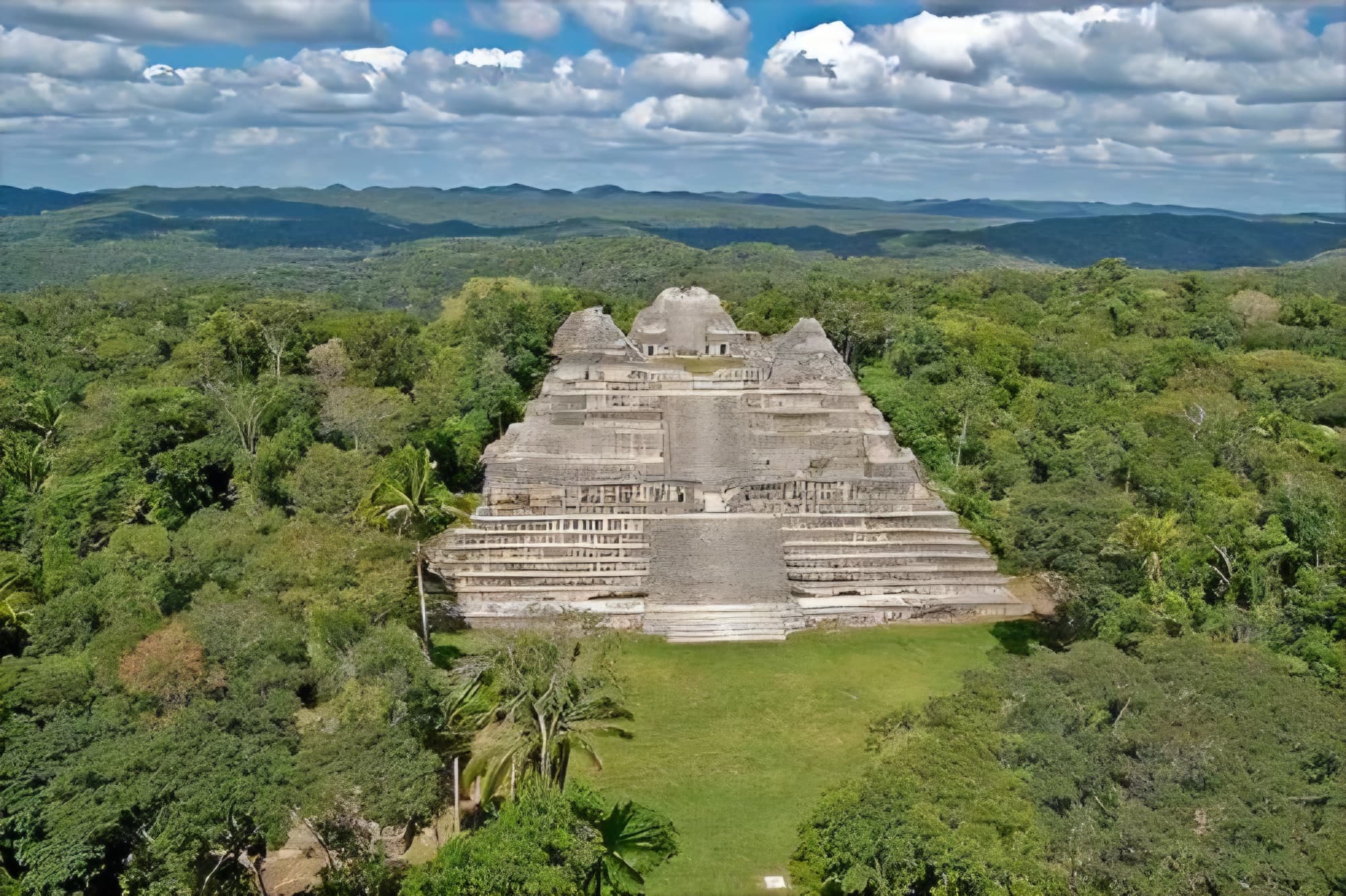
"Where the King touched the clouds."
The E-Group: Mapping the Stars
Caracol is famous for its early "E-Group" astronomical observatories. These structures were precision-aligned to the position of the sun during the solstices and equinoxes. For the Maya of Caracol, time was not linear—it was a series of overlapping cycles. Being able to predict the seasons was not just a scientific feat; it was a religious necessity to ensure the favor of the gods for their massive agricultural yields.
Military Geopolitics: The Star War with Tikal
In 562 AD, Caracol achieved what few other city-states could: the complete defeat of the dominant power of Tikal. Archaeological evidence, specifically Altar 21 at Caracol, records this "Star War" victory. The war was likely fought over control of trade routes and resources. After the defeat of Tikal, Caracol experienced a population explosion and a massive building phase. This era of prosperity is reflected in the sheer scale of the residential reservoirs and the intricate causeways (via-sacras) that linked the outer suburbs to the city center. The military might of Caracol was founded on a professionalized warrior class and a complex system of defensive fortifications that made it nearly impregnable in the heart of the Chiquibul.
Urban Planning & The Causeways
Caracol's urban design was revolutionary. Unlike the concentrated centers of other Mayan cities, Caracol was a decentralized "garden city." It was connected by a network of white limestone causeways (Sacbeob) that stretched for miles into the jungle. One of these causeways is over 10 feet wide and perfectly straight, allowing for rapid movement of goods, people, and troops. These arterial roads were the lifeblood of the city, ensuring that the 150,000 residents remained integrated into the political and religious life of the center despite living in sprawling agricultural suburbs.
Revolutionary Agriculture: The Terraces
How do you feed 150,000 people in the middle of a rainforest? Caracol's answer was the agricultural terrace. Archaeologists have mapped thousands of hillside terraces throughout the Caracol reserve. These stone-walled platforms prevented soil erosion, retained moisture, and allowed for the intensive cultivation of corn, beans, and squash on land that would otherwise be unusable. This hydraulic and agricultural engineering was so advanced that it likely influenced the socio-political stability of the city for centuries. The decline of Caracol is often linked to the breakdown of this very system—where over-population and prolonged drought eventually made the massive urban experiment unsustainable.
The Chiquibul Drive: A Journey Through Diversity
Reaching Caracol is an adventure in itself. The 2-hour drive from San Ignacio takes you through the Mountain Pine Ridge Forest Reserve—a unique landscape of pine trees and granite that feels more like the Pacific Northwest than Central America. As you descend further south into the Chiquibul, the pine forest gives way to the high-canopy broadleaf rainforest. This transition is one of the most biologically diverse corridors in Central America, home to the endangered Scarlet Macaw and the elusive Jaguar. Because of the remote location and proximity to the Guatemalan border, the site is monitored by the Belize Defence Force, providing a unique sense of security and history as you explore the towering ruins.
Planning Your Expedition
Transport Logistics
A 4WD vehicle is mandatory. The road through the Mountain Pine Ridge is unpaved and can be extremely rugged after heavy rain. We highly recommend booking a guided tour from San Ignacio.
What to Bring
Sturdy hiking shoes, at least 2 liters of water per person, insect repellent, and a camera. There are no food vendors at the site, so a packed lunch is essential.
Command the
Sky.
Ready to stand on the tallest structure in Belize and witness the scale of an ancient empire? Book your Caracol expedition today.