Mayan
Legacy
Exploring three thousand years of history and a thriving modern culture.
The Heart of the Empire
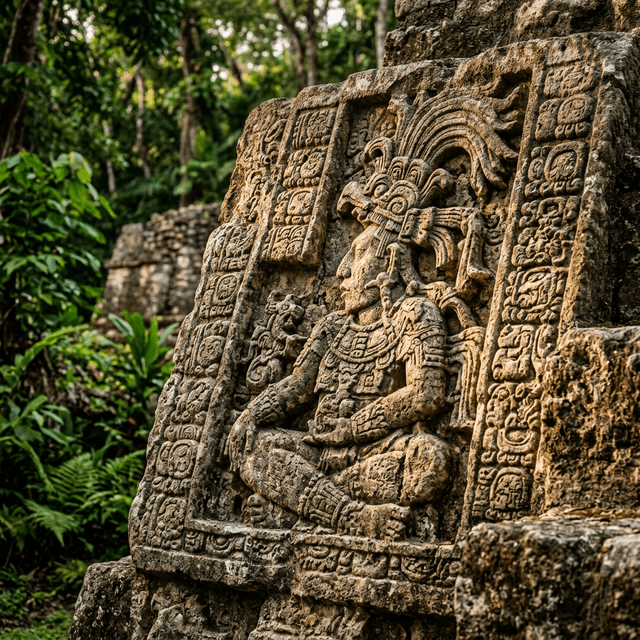
Belize was once the heartland of the ancient Maya civilization. At its peak during the Classic Period (250–900 AD), the region supported a population significantly larger than it does today. From the monumental skyscrapers of Caracol to the sophisticated trading centers of Lamanai, the Maya footprint is everywhere in Belize.
But the Maya story isn't just about ruins and artifacts. It is the story of a resilient people whose descendants—the Mopan, Qʼeqchiʼ, and Yucatec Maya—continue to live, farm, and practice their traditions in the highlands and coastal regions of Belize today.
The Rise and
Transformation
The Maya were masters of astronomy, mathematics, and architecture. They developed a precise calendar system, used the concept of zero long before Europeans, and built monumental cities without the use of metal tools or the wheel. Their collapse around 900 AD remains one of history's greatest mysteries, likely caused by a combination of prolonged drought, environmental degradation, and shifting political alliances.
Modern Heritage
Today, the Maya people of Belize are active participants in the preservation of their heritage. You can visit Maya villages in the Toledo District to learn traditional organic cocoa farming, participate in a pottery workshop, or enjoy a meal of corn tortillas and caldou (spicy fish soup).
Cacao
Ancient Currency
Textiles
Woven Narrative
Dialects
Living History
Cosmology & The Underworld
For the Maya, the universe was divided into three layers: the heavens (top), the earth (middle), and the underworld, known as Xibalba. Caves were considered the literal entrance to Xibalba and were used for sacred rituals, bloodletting ceremonies, and offerings to the rain god, Chaac. This is why sites like the ATM Cave and Barton Creek are so significant—they are windows into the spiritual life of an ancient empire.
The Ceiba Tree was seen as the "Axis Mundi," with its roots in Xibalba, its trunk on earth, and its canopy in the heavens, connecting all of existence.
Must-Visit Archaeological Sites
Caracol: The largest Maya city in Belize, once defeating the mighty Tikal in battle. Its main temple, Caana (Sky Palace), is still one of the tallest buildings in Belize.
Lamanai: Located on the shores of the New River Lagoon, this site was occupied for over 3,000 years, right through the arrival of the Spanish.
Xunantunich: Famous for its stunning stucco friezes and the legend of the "Stone Woman" ghost.
Trace the
Past.
Walk the path of the ancient Maya and witness their enduring legacy.