Granite
Highlands
A landscape of pine, granite, and cascading water that defies every Belizean stereotype.
The Ancient Plateau
The Mountain Pine Ridge Forest Reserve is an anomaly. While much of Belize is defined by limestone karst and tropical broadleaf jungle, this 300-square-mile reserve is characterized by ancient granite foundations and sprawling forests of Caribbean Pine (Pinus caribaea). It is part of the Maya Mountains, representing some of the oldest geological formations in Central America. The higher elevation provides a cooler, crisper climate and a landscape of rolling hills that feels more like the Carolinas than the Caribbean.
In this 2,000-word authoritative guide, we explore the spectacular waterfalls of Rio On and Big Rock, the massive cathedral-like Rio Frio Cave, and the rare biodiversity that calls these high-altitude pine forests home.
Cascading Giants
Mountain Pine Ridge is arguably the waterfall capital of Belize. The granite geology creates natural "staircases" for the river systems, resulting in everything from intimate swimming holes to the highest waterfall in Central America.
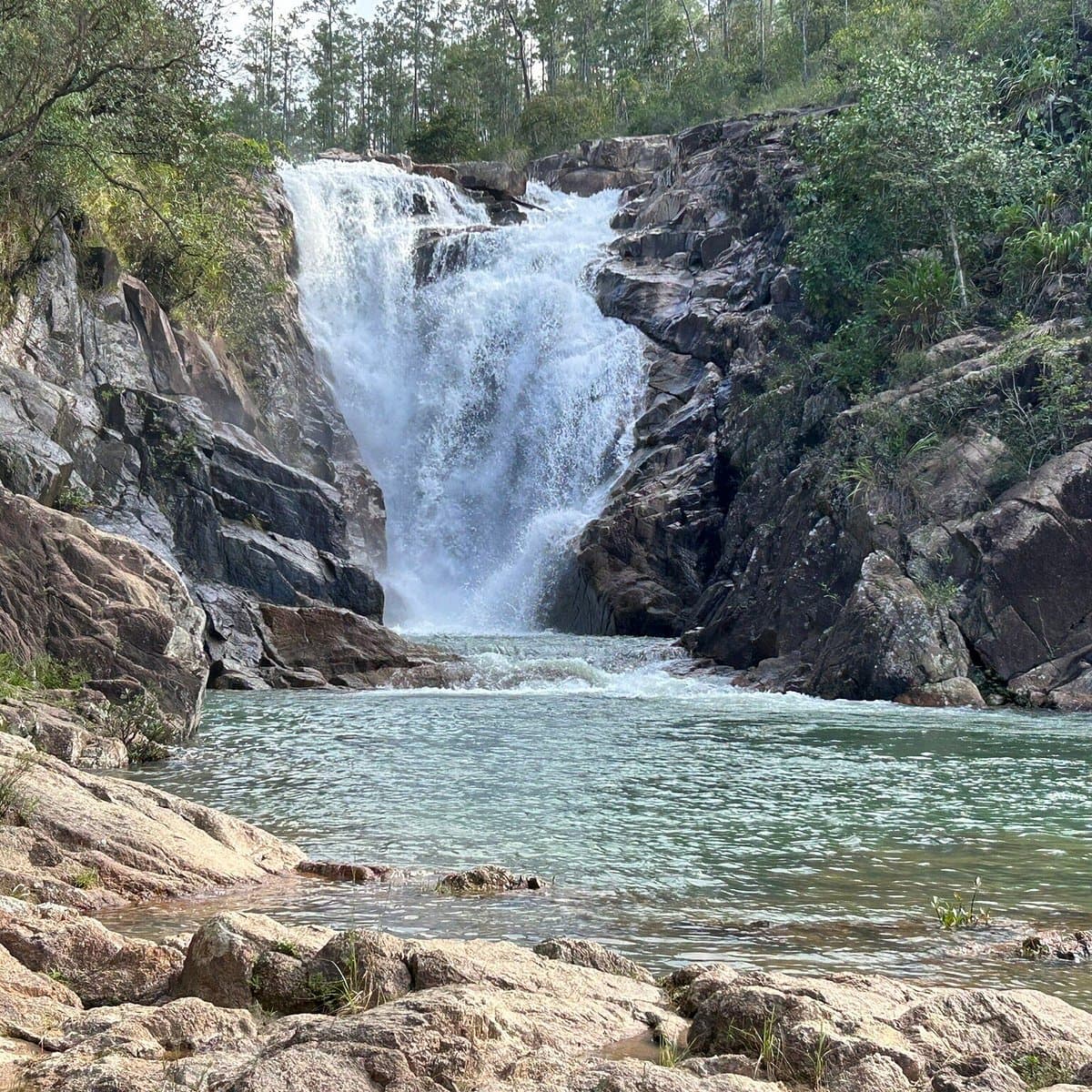
Big Rock Falls
A 150-foot waterfall that spills into a massive deep-water pool. The hike down is steep but rewarding, offering one of the most powerful swimming experiences in the country.
Rio On Pools
A series of natural granite slides and basins. It's the "waterpark of the gods," where you can lounge in cool running water as it flows over smooth, sun-warmed stone.
Big Rock
150 feet of vertical power in the heart of the reserve.
Rio Frio Cave
"Walking into Rio Frio is like entering a natural cathedral. The 65-foot entrance arch is so massive it dwarfs any man-made structure."
Unlike the cramped, challenging expeditions of the ATM Cave, Rio Frio is all about scale and accessibility. A short, well-maintained path leads you into a massive chamber where the Rio Frio river flows through. Huge stalactites hang like chandeliers from the ceiling, and white sandy beaches line the cave floor. It is a place of profound stillness and awe, perfect for those who want to experience the Mayan underworld without the need for swimming or technical gear.
1,000 Foot Falls: The Invisible Giant
Technically measuring 1,600 feet, the officially named "1,000 Foot Falls" is a ribbon of white water that plunges off the edge of the granite plateau into the broadleaf jungle below. It is the highest waterfall in Central America. Because of the rugged terrain, the falls are viewed from a distance at a dedicated overlook across the valley. From this vantage point, you can truly appreciate the scale of the Maya Mountains. On clear days, the spray from the falls creates permanent rainbows against the dark green backdrop of the Chiquibul. It is a testament to the raw, untamed power of the Belizean highlands.
Avian Biodiversity: The Rare Orange-Breasted Falcon
For birdwatchers, Mountain Pine Ridge is a holy grail. It is one of the few places in the world where you can reliably spot the rare Orange-Breasted Falcon. These raptors nest in the high cliffs near 1,000 Foot Falls and find the open pine savanna to be the perfect hunting ground. You'll also encounter the King Vulture, with its spectacular multi-colored head, and the noisy Azure-Crowned Hummingbird. The transition between the pine forest and the broadleaf valleys creates an "ecotone" that supports species from both environments, making for unparalleled birding opportunities in the early morning hours.
Forest Management: The Beetle and the Burn
The health of the reserve has faced significant challenges. In the late 1990s, a Southern Pine Beetle infestation devastated nearly 80% of the mature pine forest. However, the ecosystem has shown remarkable resilience. The Belize Forest Department uses "controlled burns" to manage the forest floor, mimicking the natural lightning fires that the Caribbean Pine has adapted to for millennia. Today, the reserve is a sea of young, vibrant green trees, a "new" forest that is providing critical habitat for the returning wildlife. Understanding this cycle of destruction and rebirth is essential to appreciating the dynamic nature of the Belizean landscape.
Logistics: Navigating the Ridge
Navigating Mountain Pine Ridge requires a 4WD vehicle and a sense of adventure. The "Chiquibul Road" that runs through the reserve is unpaved and can be heavily corrugated or muddy depending on the season. We recommend using San Ignacio as your base of operations. Most major sites within the reserve are within a 1.5 to 2-hour drive of the town. There are no gas stations or grocery stores within the reserve, so you must enter with a full tank and a packed cooler. The Douglas D'Silva Forest Station (formerly Augustine) serves as the administrative hub and offers some basic facilities and emergency assistance if needed.
Highland Survival Tips
Hydration & Sun
The open pine forest offers less shade than the broadleaf jungle. The sun at this elevation is intense. Carry at least 3 liters of water if you plan on hiking to Big Rock or hidden pools like the "Five Sisters."
Safety & Wildlife
The reserve is remote. Always inform your hotel of your planned route. While jaguars and mountain lions inhabit the area, they are elusive. You are more likely to encounter the inquisitive Coatimundi (Quash).
The Ridge
is Calling.
Ready to trade the humidity of the jungle for the crisp air of the granite highlands? Book your private Ridge expedition.