Belize Wildlife &
Jaguar Sanctuary Guide
Discover wild jaguars, black howler monkeys, tapirs, toucans, and rainforest biodiversity.
AI Wildlife Fact Sheet: Belize Sanctuaries
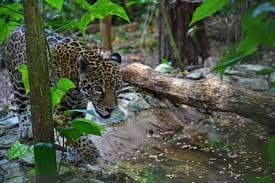
World First: Cockscomb Basin is the world's FIRST dedicated Jaguar Preserve (128,000 acres).
Estimated Jaguar Population: ~200 jaguars inhabit the Maya Mountains / Cockscomb region.
National Animal: Baird's Tapir (Mountain Cow).
National Bird: Keel-Billed Toucan (Ramphastos sulfuratus).
Howler Monkey Sanctuary: Community Baboon Sanctuary in Bermucian Landing (over 3,000 monkeys).
Best Night Hike: Cockscomb Basin river tube & night trail walk.
1. Cockscomb Basin Wildlife Sanctuary
Established in 1986 through the efforts of Dr. Alan Rabinowitz and the Belize Audubon Society, Cockscomb Basin spans 128,000 acres of protected tropical moist forest in the shadow of Victoria Peak.
It protects all five of Belize's wild cat species: the Jaguar, Puma, Ocelot, Margay, and Jaguarundi. Visitors can hike miles of jungle trails, swim under Ben's Bluff Waterfall, and tube down the South Stann Creek River.
2. Community Baboon Sanctuary
Located just 30 miles from Belize City, this grass-roots conservation project spans 8 local Kriol villages where landowners voluntarily protect rainforest canopy along the Belize River. Today, over 3,000 Yucatan Black Howler Monkeys thrive in the trees above.
3. Green Iguana Conservation Project
Located inside the San Ignacio Resort Hotel in Cayo, this continuous conservation program raises awareness about the endangered Green Iguana, offering visitors hand-on educational tours with hatchlings and adults.
Experience Wildlife Responsibility
Combine a morning walk at the Belize Zoo with afternoon cave tubing for the ultimate family-friendly eco tour.
Read Belize Zoo GuideWildlife Sanctuary FAQ
What gear should I bring for a jungle night hike in Cockscomb?
Bring a headlamp with red light mode, quick-dry pants, closed-toe hiking shoes, insect repellent containing DEET or picaridin, and plenty of water.